Ottawa's residential market entered 2026 on a balanced footing. Inventory levels remain higher than in
recent years, giving buyers more choice, while sellers continue to adjust to conditions that reward accurate
pricing and patience. Benchmark prices are down year over year across all housing types, with softer
conditions most evident in townhouses and apartments. Detached homes continue to show greater price
stability. Overall, January's data points to a market that is operating more evenly, rather than one under
broad-based pressure.
"What January is showing us is a market that's adjusting in a healthy way," said the President of the Ottawa
Real Estate Board. "We're seeing more choice for buyers, more realism on the selling side, and pricing that's
responding to those conditions without sharp swings. That kind of balance is a sign of stability, not stress."
R E S I D E N T I A L M A R K E T A C T I V I T Y
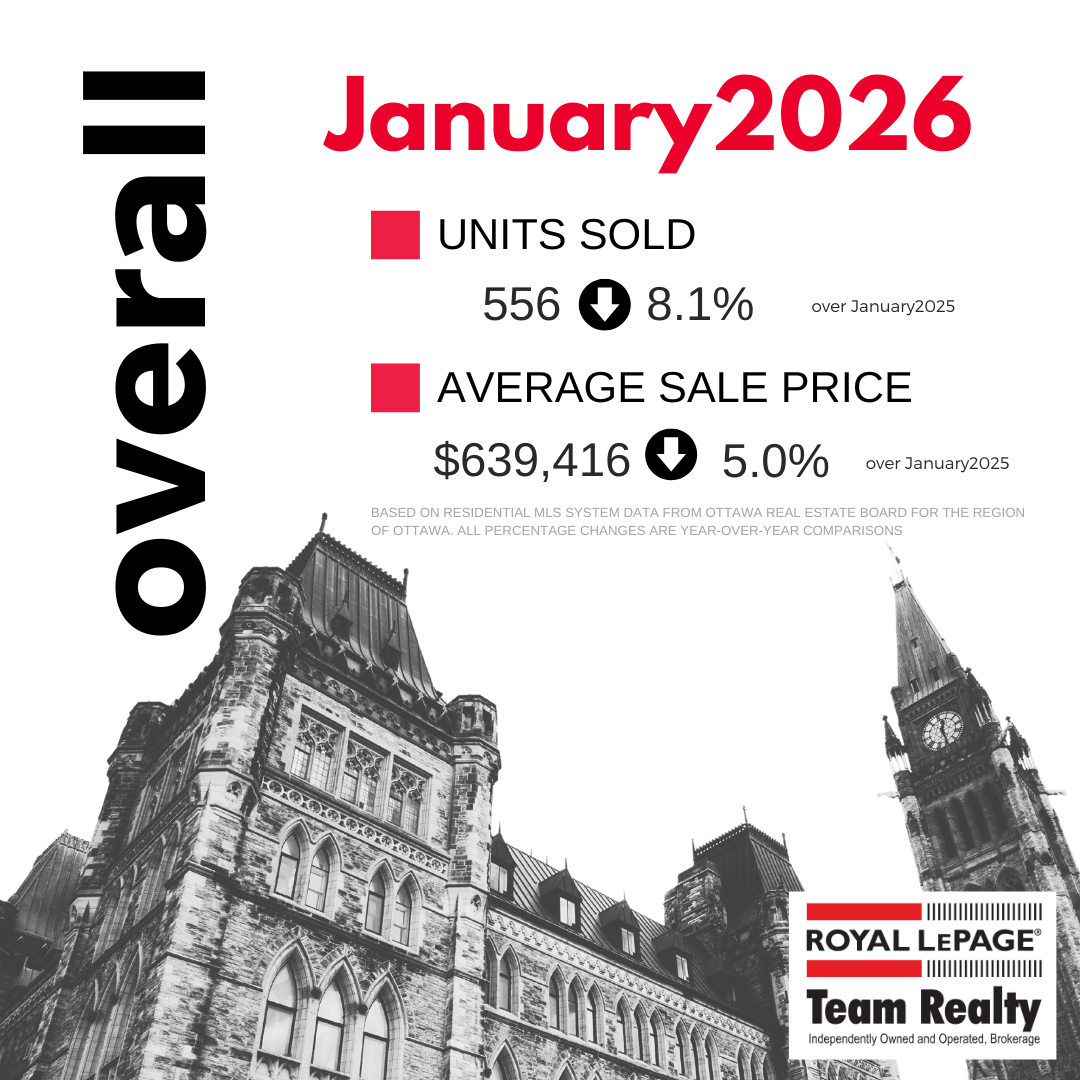
In January, 610 residential properties sold in Ottawa, reflecting a typical post-holiday slowdown while
also signalling a steadier start to the year. Sales were 5.6% lower than a year ago but remained within
the range of long-term January norms. This points to demand that is still present, even as buyers
continue to proceed cautiously amid ongoing affordability considerations.
Pricing activity also reflected seasonal conditions rather than renewed weakness. The average
residential sale price was $641,436, down 4.5% from January 2025, a change consistent with winter
market dynamics and a more price-sensitive buyer pool. Recent interest rate reductions have begun to
ease pressure at the margins. January's data suggests their impact is appearing first in buyer
engagement rather than completed transactions.
P R I C E S A N D MARKET B A L A N C E
Supply conditions continue to vary significantly by property type. Overall, new listings totalled 1,522
units, up 8.8% year over year, while active listings reached 2,673. This is an increase of 22.7% from last
January. Although inventory levels remain elevated compared to recent seasonal norms, growth has
slowed, helping to prevent a buildup of excess supply.
With months of inventory at 4.4, Ottawa's market is operating closer to long-term, pre-pandemic
averages. This level of supply is providing buyers with more choice and negotiating flexibility, while
still allowing well-priced homes to attract solid interest. Rather than putting sharp downward pressure
on prices, current inventory levels are supporting a more balanced market.
L O O K I N G A H E A D
January's data reflects a familiar winter pattern, with slower sales and cautious buyer behaviour
shaped by seasonal factors and ongoing economic uncertainty. At the same time, there are early
signs that market conditions are beginning to firm. The apartment segment, in particular, showed
improving absorption, with lower months of inventory alongside higher sales and dollar volume.
Townhome activity held up, while detached trends remained steady, reinforcing a market that is
segmented by property type but remains largely balanced overall.